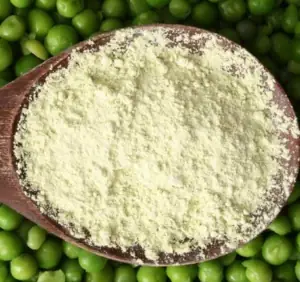
Most starch gets broken down and absorbed early in digestion. Resistant starch, as the name suggests, passes through mostly untouched until it reaches the large intestine.
Once there, it becomes another fuel source for gut bacteria, alongside konjac glucomannan and baobab fiber — three different fermentable substrates rather than one.
It's derived from peas specifically because pea starch has a well-documented resistant fraction, making it a common choice in fiber-forward formulas like this one.
In this formula: Resistant Pea Starch is one of five named actives — see the full mechanism on our how it works page.